
Last updated September 20, 2026
Full 25-point door and opener safety check with every visit - springs, cables, rollers, tracks, and your LiftMaster or Chamberlain opener included
You get a price before we start. It does not change when the truck arrives.


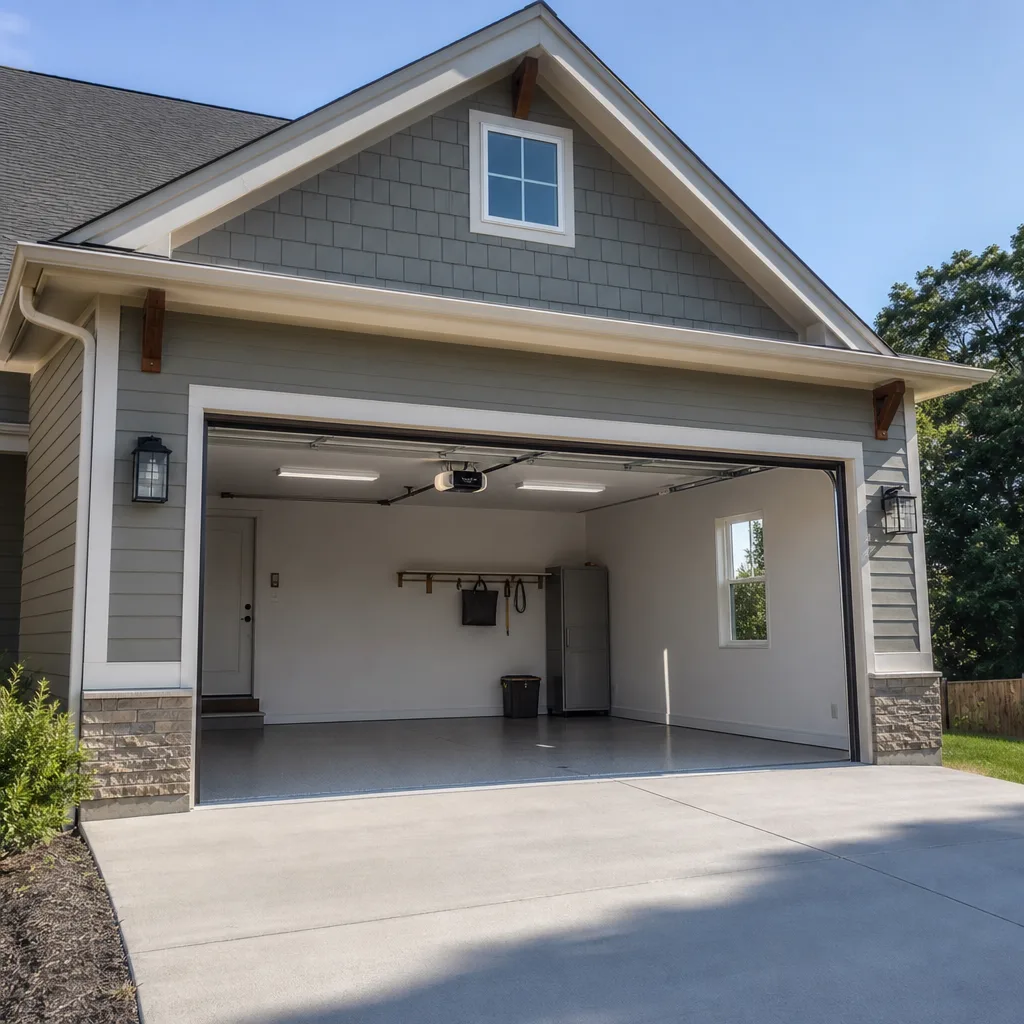
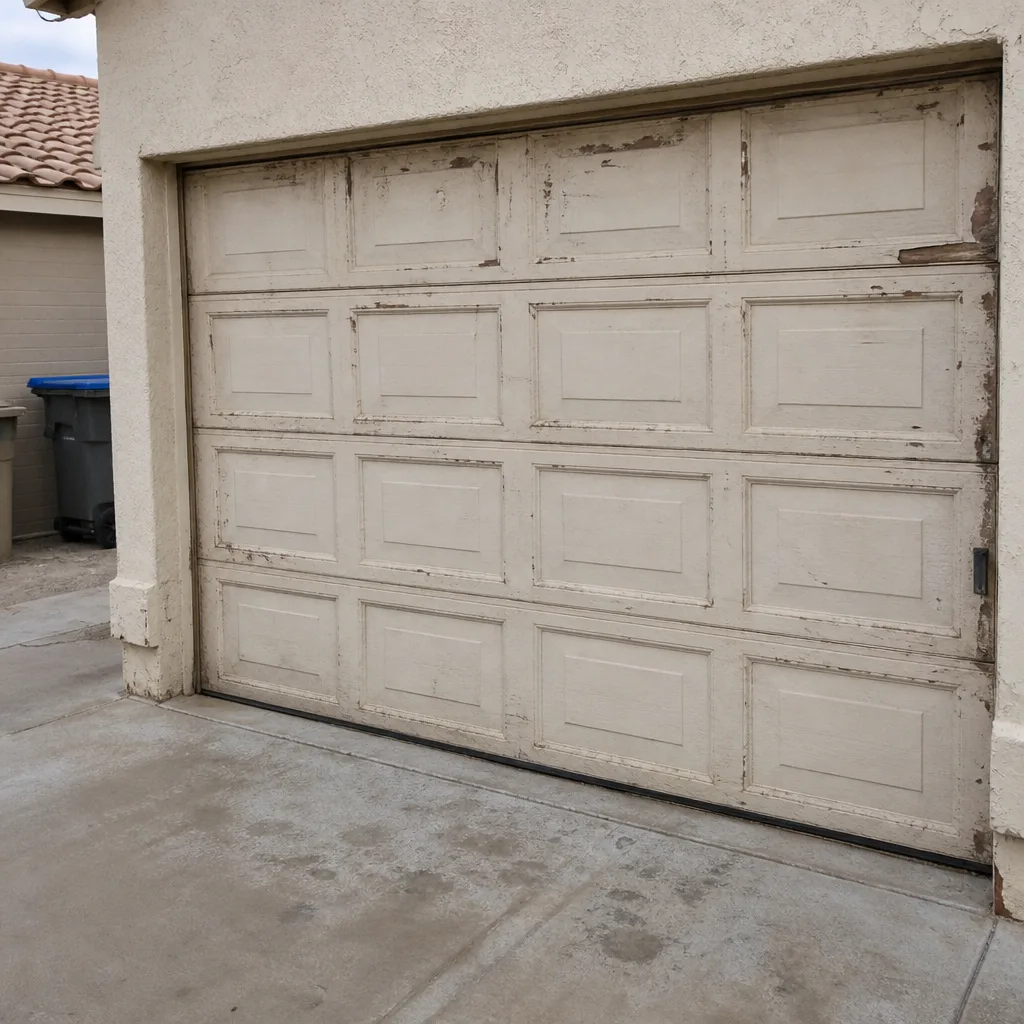 Before
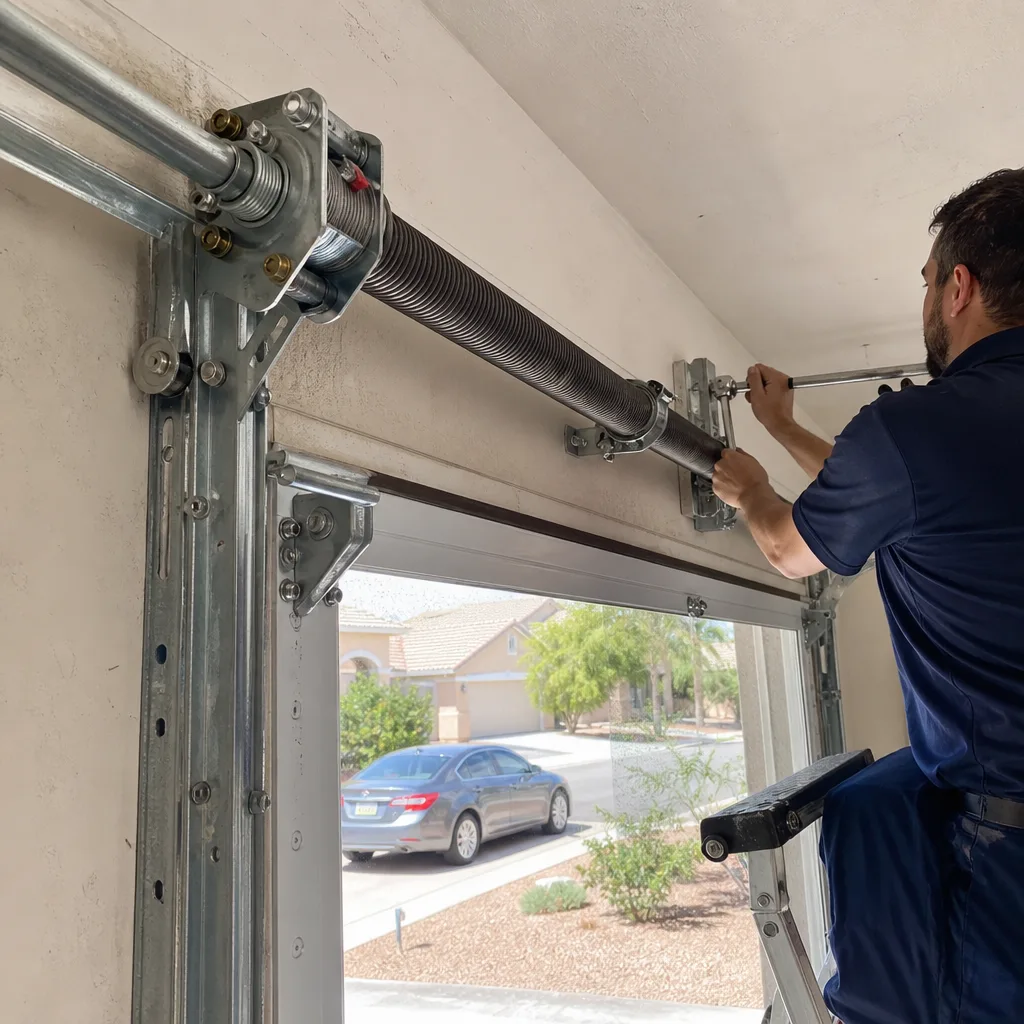 After
After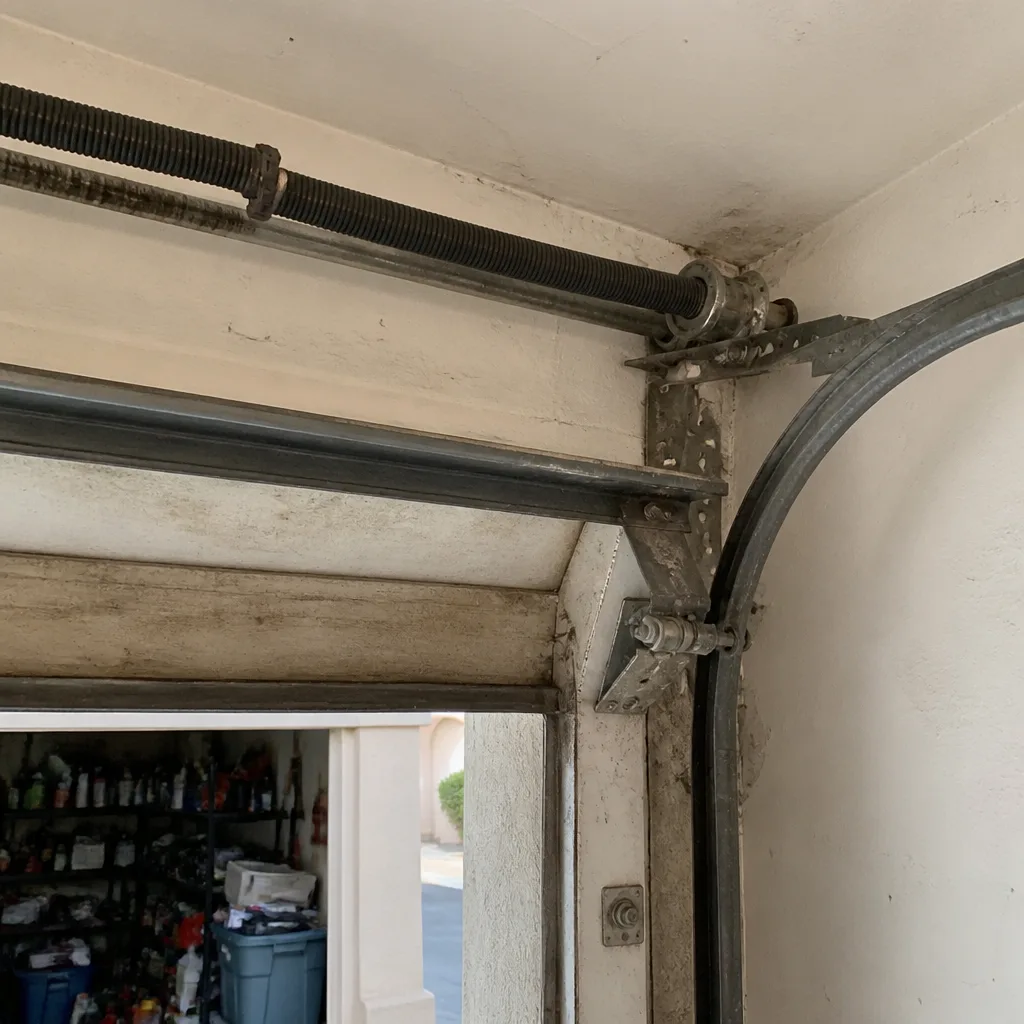 Before
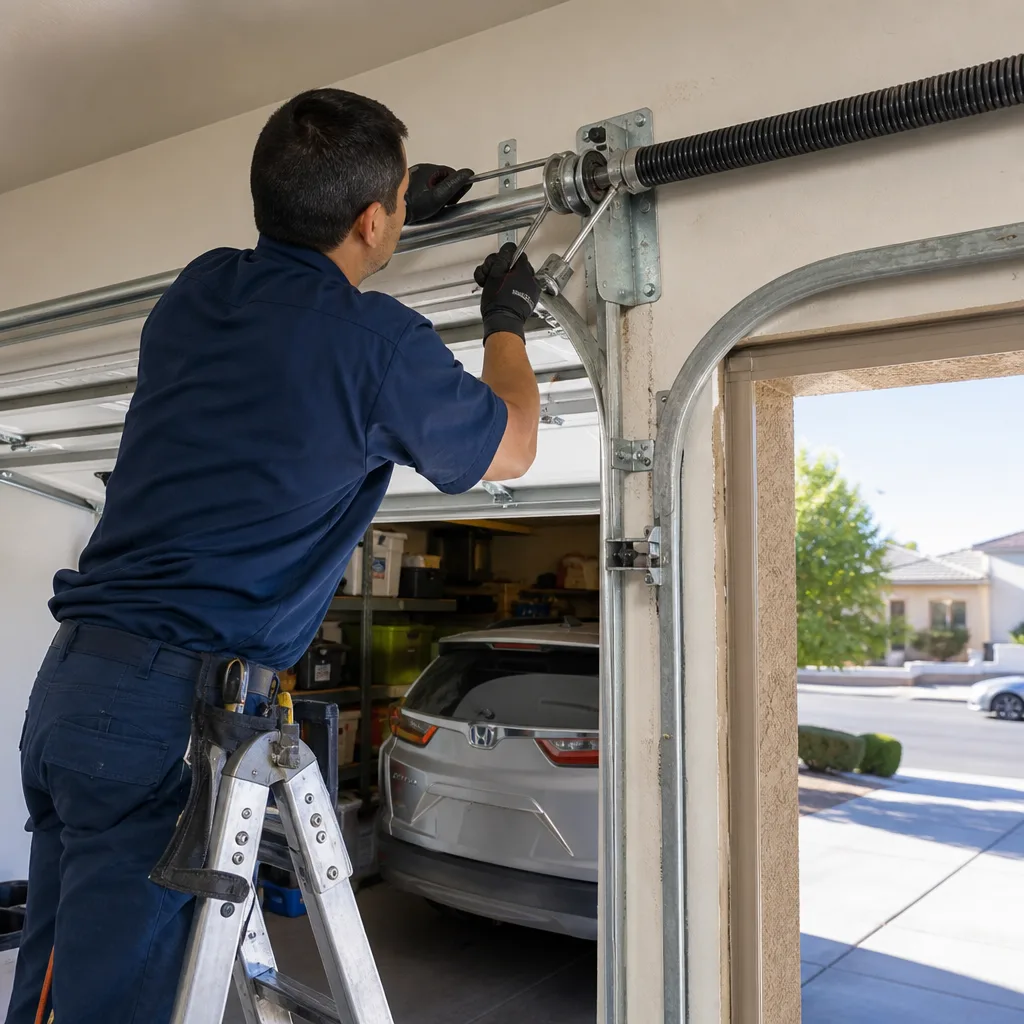 After
After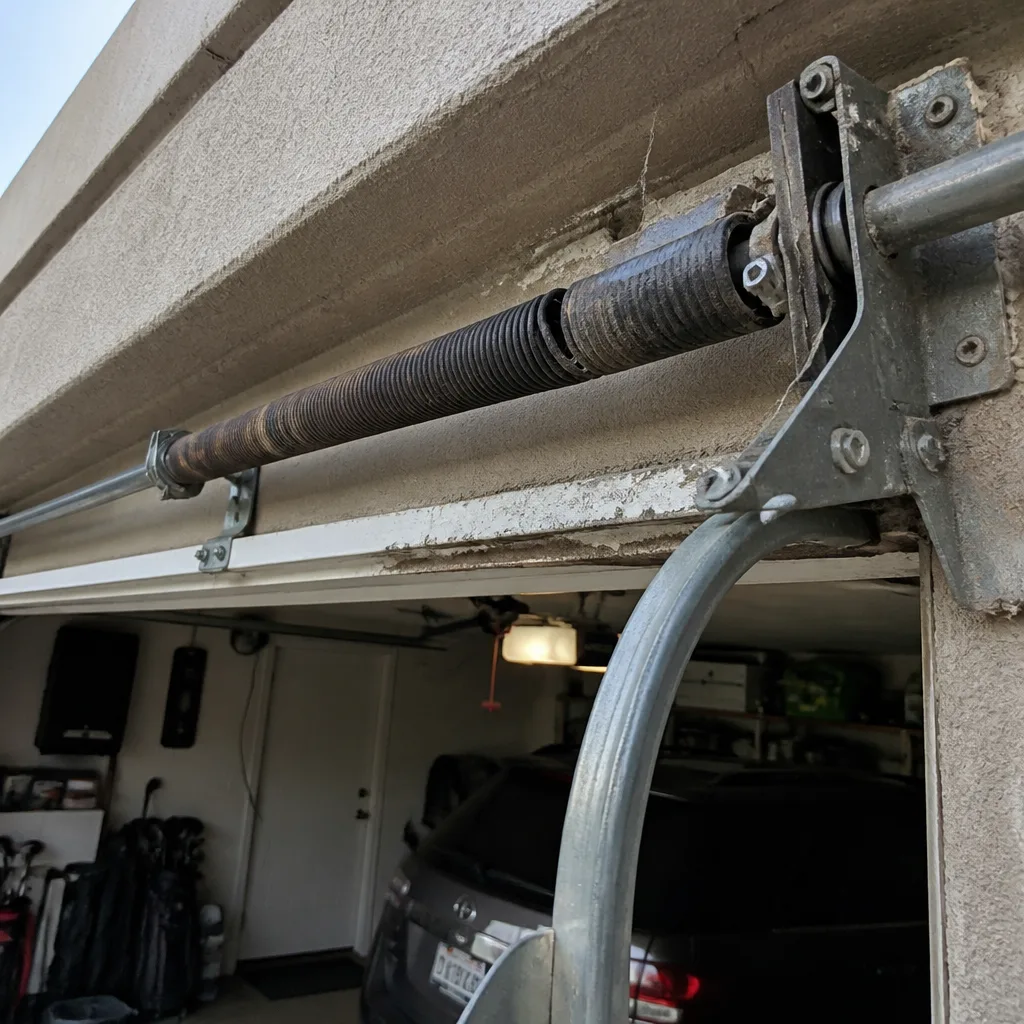 Before
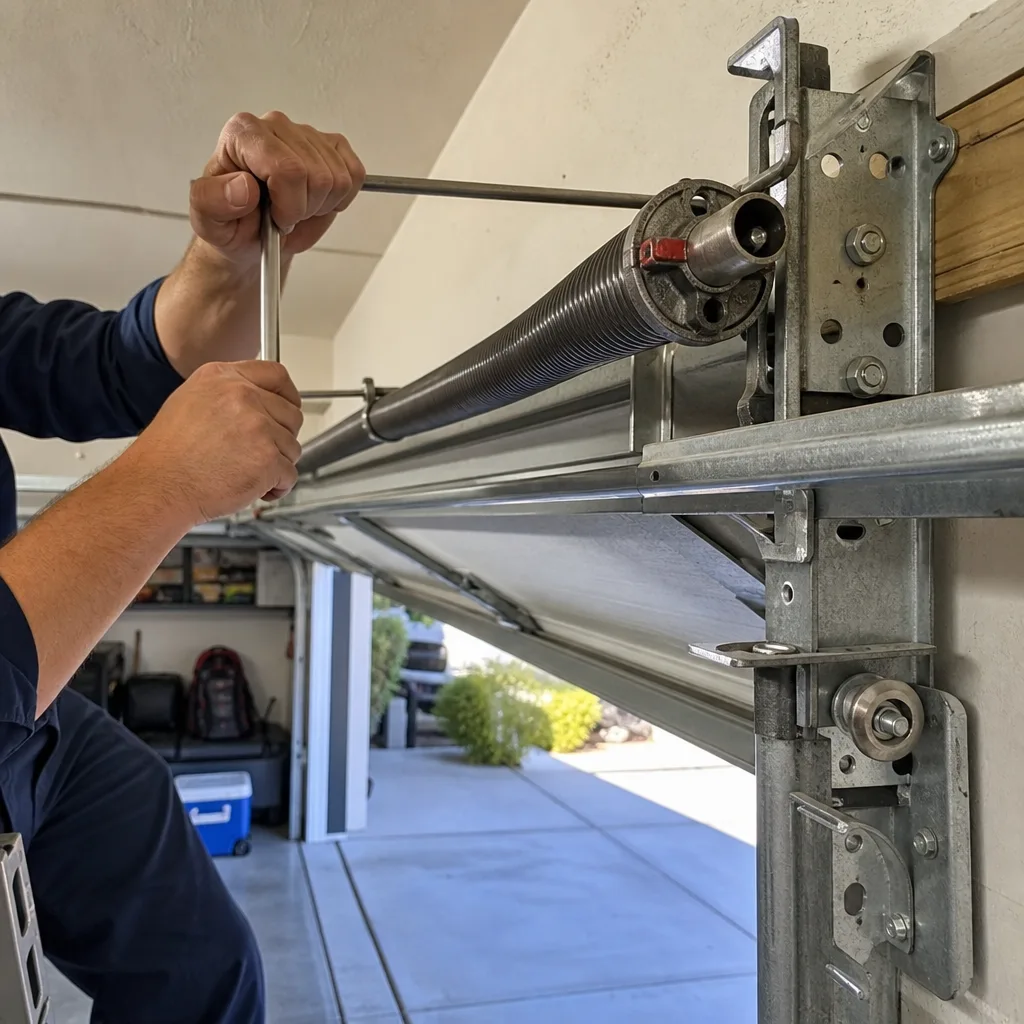 After
AfterGarage Door Repair Maintenance Checklist for Chandler Homeowners
The most common garage door spring failure in Chandler happens in January and February, and it’s not because of cold. It’s because the 40-degree overnight temperature swings contract metal that hasn’t been lubricated since summer. A torsion spring that ran quietly through a 115-degree July afternoon becomes brittle and friction-bound by a 38-degree February morning, and the failure is usually written off as a random break. It isn’t. This guide walks you through the maintenance checklist that catches those failures before they happen, with pass/fail criteria for every item, exact product specifications for our dry desert conditions, and a clear line between what you can safely do yourself and what belongs in the hands of a licensed technician in Chandler. For a deeper look at the symptoms that precede these failures, see our Garage Door Warning Signs: A Chandler Homeowner’s Reference Guide.
Quick Answer
A garage door maintenance checklist in Chandler should include a twice-yearly balance test, quarterly lubrication of the torsion springs and rollers using a silicone-based or lithium-based lubricant, monthly visual inspection of cables and hardware, and an annual professional inspection before the January temperature swings arrive. Most of this takes under 20 minutes, and the pass/fail criteria are specific: a properly balanced door holds position within 2 inches when released at half-open, and a healthy torsion spring shows no gaps in its coil and no rust bloom at the ends.
Table of Contents
- The Door Balance Test: The 2-Inch Rule
- Lubrication for Desert Conditions: What to Use and What to Skip
- Weekly Visual Inspection: Cables, Rollers, Hinges, and Hardware
- Safety Feature Testing: Auto-Reverse and Photo Eyes
- Documenting Your Own Inspection: Photos That Get You a Real Quote
- Chandler-Specific Maintenance Frequency Table
- Homeowner Tasks vs. Licensed Technician Work
BeforeAfterThe Door Balance Test: The 2-Inch Rule
Every garage door maintenance checklist starts with balance, because balance is the diagnostic that tells you whether the torsion spring is delivering the tension it’s rated for. The test takes 30 seconds and requires nothing more than the release handle and a tape measure, but it’s the single most predictive maintenance step a Chandler homeowner can do. When a door is balanced, the opener motor does the work of moving it. When it’s out of balance, the motor fights the spring, the opener’s logic board overheats, and the spring itself cycles through load stress it was never designed to absorb.
Here’s the process, with the pass/fail threshold we use on service calls across Chandler:
- Close the door completely. Pull the release handle (the red cord hanging from the opener rail) to disconnect the door from the opener carriage.
- Lift the door manually to roughly half-open, around waist height.
- Release it. Don’t nudge it, don’t guide it, don’t hold it.
- Watch what happens.
Pass: The door stays within 2 inches of where you released it, moving no more than a fraction either direction. That means the spring tension is doing its job: counterbalancing the door’s full weight at every point in its travel.
Fail – drops: The door sinks more than 2 inches, or falls to the floor. The spring is under-tensioned or weakened. In Chandler, we see this most often on doors where the torsion spring was adjusted for a cooler season and never rechecked. A door that drops is overloading the opener pull string, the carriage, and the motor. Left unaddressed, the spring snaps, usually at the winding cone, and the door becomes dead weight.
Fail – rises: The door climbs on its own. The spring is over-tensioned, which shortens its cycle life dramatically. Over-tensioned springs also fail in the opposite way people expect: the door slams open with authority and can damage the horizontal track or the opener rail when the travel limit is hit.
Run this test quarterly, which aligns with Chandler’s seasonal temperature shifts. If the result is a fail in either direction, stop using the opener and have the spring tension adjusted by a technician. This is not a homeowner adjustment task under Arizona safety standards, and we’ll explain why later in this guide. For context, our Garage Door Repair in Chandler team runs this test on every single service call before quoting anything, because it’s the fastest way to identify the root cause.
Lubrication for Desert Conditions: What to Use and What to Skip
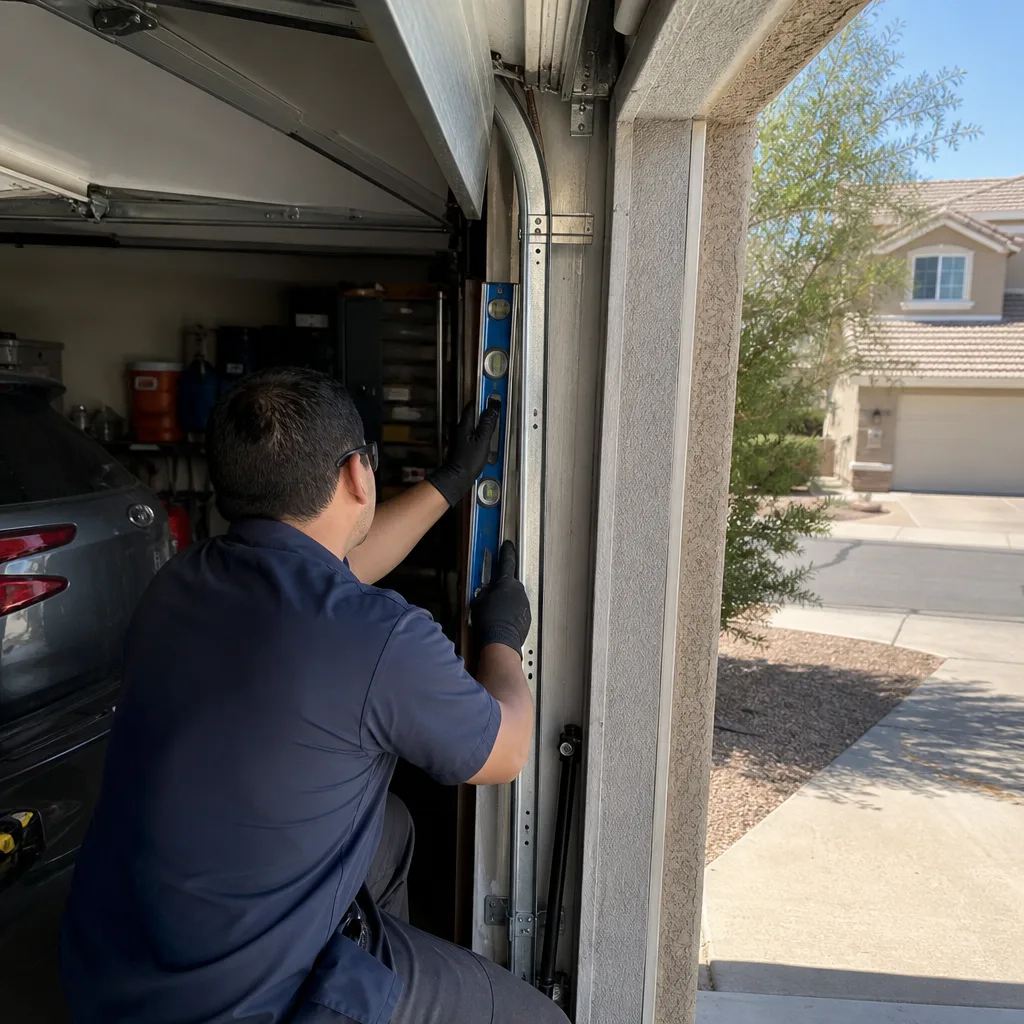
Chandler has a lubrication problem that most generic maintenance guides never address: our air is dry, our UV index averages 8 or higher for most of the year, and our dust load is significant. That combination bakes standard lubricants into a sticky film within six weeks, and that film attracts sand from the Sonoran Desert that grinds against the spring coils every time the door cycles. The maintenance checklist item isn’t just “lubricate the door.” It’s “lubricate with the right product for 10% humidity and 110-degree afternoons.”
Here’s the spec we recommend for each component, based on what we’ve measured surviving a full Chandler summer without turning to varnish:
- Torsion springs: A silicone-based spray lubricant or white lithium grease applied lightly along the coil gap. Silicone penetrates the friction points without leaving a tacky residue that holds dust. Apply a thin coating, not a soak. Wipe away any drips. Do not use penetrating oil (WD-40 or similar) as a lubricant: it’s a cleaner and solvent first, which strips existing lubrication and leaves bare metal exposed.
- Rollers: If you have nylon rollers with sealed bearings, they don’t need lubrication on the wheel itself, only on the stem where it meets the hinge barrel. If you have steel rollers, a light silicone spray on the bearing is fine. Never apply grease to a nylon roller wheel: it degrades the nylon.
- Hinges and pivot points: White lithium grease or a dry PTFE-based lubricant. Hinges take vertical load and horizontal shear, and in Chandler’s climate they’ll creak within a year if left dry. The creak is the surface symptom; the actual wear is at the hinge pin, and a worn pin changes the door’s geometry enough to throw off the panel alignment over time.
- Opener rail or screw drive: If you have a Genie screw drive opener, use a light coat of the manufacturer-recommended grease on the screw. If you have a LiftMaster or Chamberlain belt or chain drive, the rail generally doesn’t require lubrication; check the manual. Most modern openers with a belt drive are designed to run dry, and adding grease creates a dust magnet.
- Track (do not lubricate): The vertical and horizontal tracks are guides, not bearing surfaces. Lubricating them is the most common DIY mistake we correct in Chandler homes. Grease on the track draws dust and creates a paste that the rollers drag through, which wears out the roller bearings faster. Clean the tracks with a dry cloth. Leave them dry.
Avoid these household products entirely: cooking spray (bakes into a polymer film under garage heat), motor oil (too heavy, holds dust), silicone caulk (it’s an adhesive, not a lubricant), and any penetrating lubricant marketed for rusty bolts. If the spring already shows surface rust bloom at the coil ends, lubrication alone won’t fix the underlying issue, and the spring needs a measured evaluation before it’s safe to touch. The lubrication schedule for Chandler should be every three months, not the generic “twice a year” that assumes a coastal climate.
Weekly Visual Inspection: Cables, Rollers, Hinges, and Hardware
The visual inspection is where a maintenance checklist earns its keep in Chandler. Our temperature swings, our dust, and our monsoon-season humidity spikes all leave marks that are visible to an attentive homeowner long before they become a $400 repair. This section tells you exactly what to look at, what “normal” looks like, and what constitutes a fail condition.
Cables: The lift cables run from the bottom brackets up along both sides of the door to the drums at the top. In a healthy state, the cable is taut at every point in the door’s travel, with no slack, no fuzzing, no broken strands, and no gaps between the cable and the drum. Run your eyes along the full length of both cables once a week. Fail conditions: any broken strands visible as fuzzy wires, any kink where the cable has jumped its drum groove, any slack when the door is closed (which indicates a spring problem, not a cable problem), or rust at the cable-to-bottom-bracket connection. A broken lift cable under tension is a serious injury hazard; if you see fuzzing, do not attempt to adjust or remove the cable yourself. Close the door if possible, disconnect the opener, and call a licensed technician.
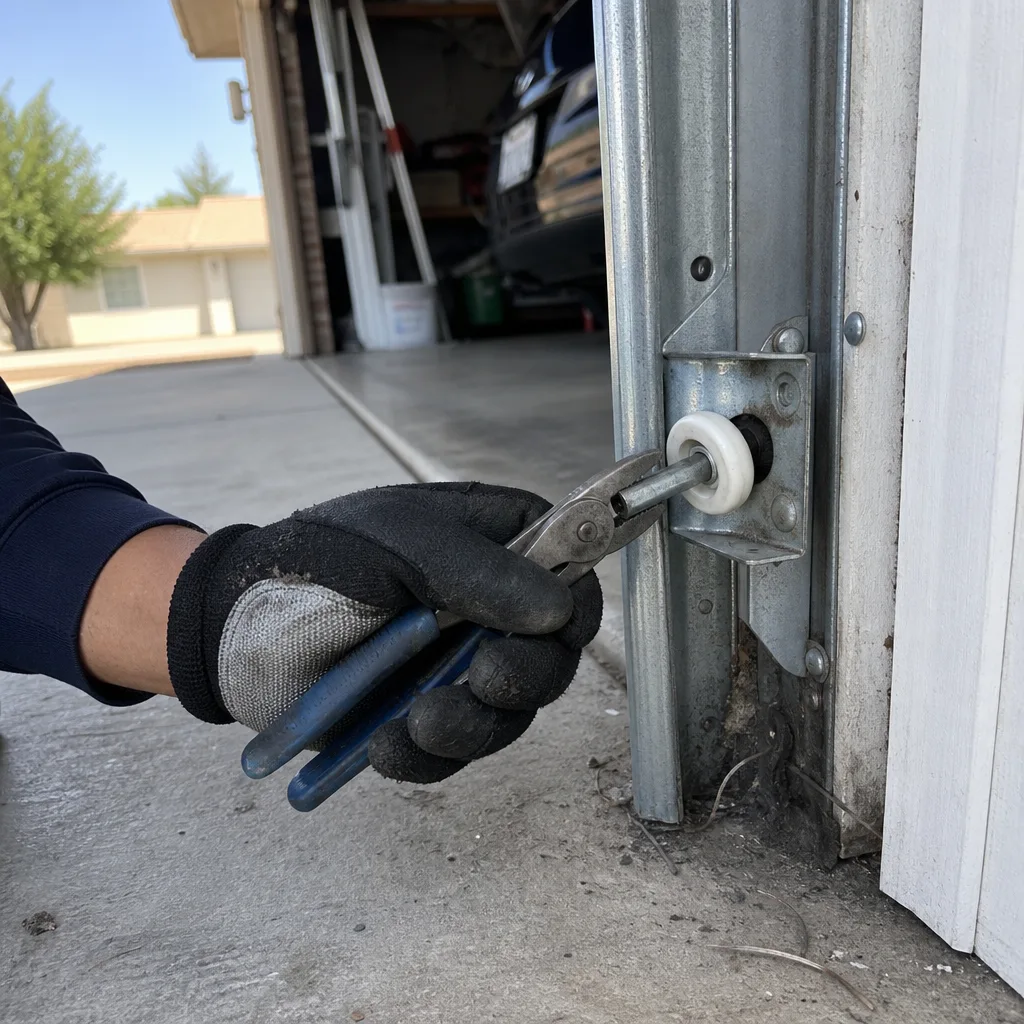
Rollers: Each roller should sit squarely in its track with the wheel centered in the track channel. Look for flat spots on the wheel, wobble when the door moves, cracked nylon rims, or a roller that’s tilted relative to the track. In Chandler, the most common roller failure we see is bearing seizure from dust ingress: the roller stops turning, and the wheel becomes a sled that scrapes through the track, carving a wear channel that eventually binds the door. If a roller isn’t spinning when the door moves, count that as a fail.
Hinges: The door hinges should sit flush against the panel faces with no daylight showing between the hinge leaf and the panel. Look for elongation around the screw holes (a sign the hinge has been carrying load beyond its rating), rust at the pin, or a visible gap between hinge leaves at the knuckle. In Chandler’s dry air, hinge rust is less common than in humid climates, but our dust accelerates hinge pin wear.
Hardware and brackets: Every lag bolt, nut, and bracket should be tight and rust-free. The bottom brackets, which anchor the lift cables, are the highest-load hardware on the entire door assembly. Look for any gap between the bracket and the door frame, any rust trail descending from a bolt head, and any movement when you press firmly against the bracket. A loose bottom bracket under cable tension is a high-risk condition under Arizona safety standards. If you can move the bracket by hand, the door should not be operated until a technician has resecured it.
Safety Feature Testing: Auto-Reverse and Photo Eyes
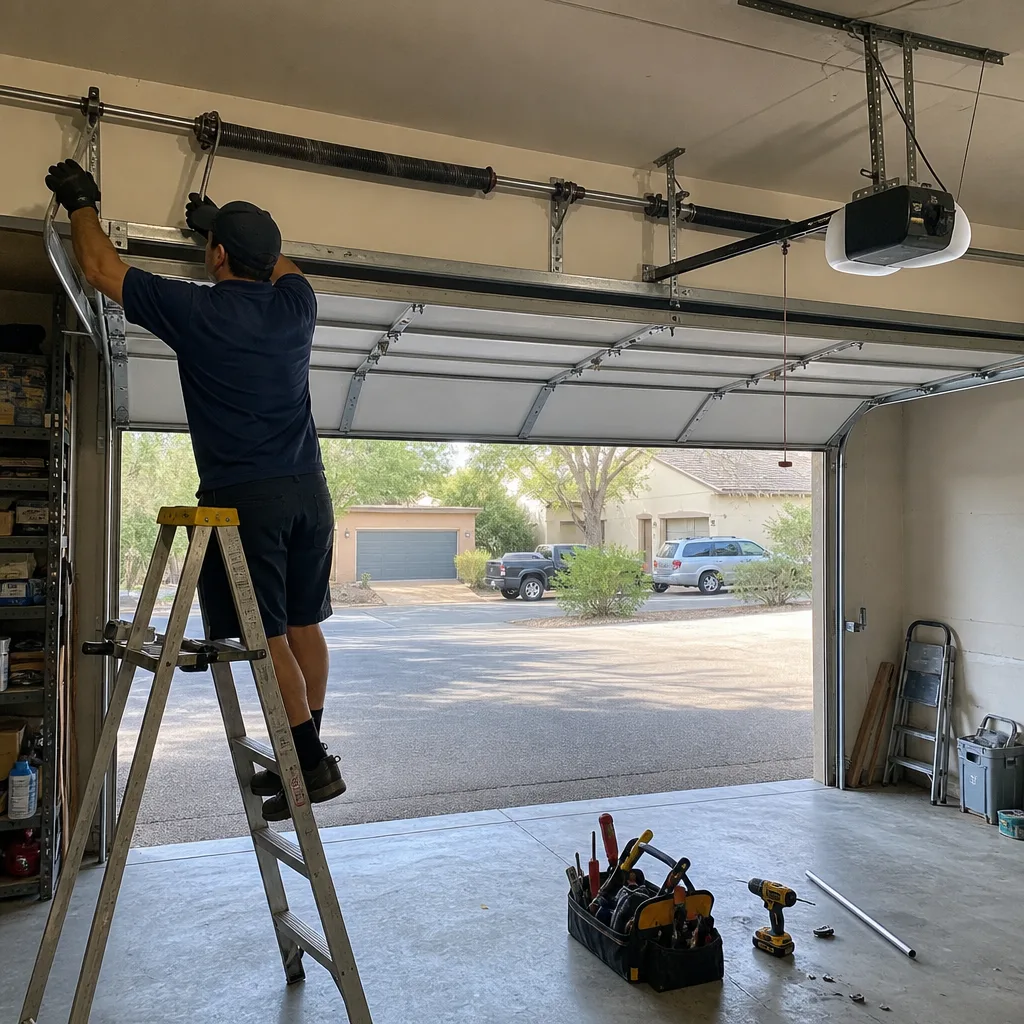
Every garage door opener manufactured for the US market since 1993 includes two mandatory safety systems: the mechanical auto-reverse, which reverses the door when it encounters resistance on the way down, and the photo eye system, which reverses the door when the invisible infrared beam between the two sensors is broken. Both are legally required, both fail in Chandler homes more often than homeowners realize, and both are testable in under two minutes.
Photo eye test: Start with the door open. Press the close button and, as the door descends, sweep your foot through the beam path near the floor. The door should stop and reverse immediately. The photo eyes are the two small units mounted 4 to 6 inches off the floor on either side of the door opening. If one or both LEDs are blinking rather than solid, the sensors are misaligned or dirty. In Chandler’s dust conditions, a lens film can block the beam before you ever notice it visually. Wipe both lenses with a dry microfiber cloth weekly as part of your routine. If the door does not reverse when you break the beam, the opener is not compliant with federal safety standards and should be serviced before further use.
Mechanical auto-reverse test: Place a roll of paper towels or a 2×4 flat on the floor under the door’s path. Press close. The door should contact the object, stop, and reverse within 2 seconds of contact without applying damaging force. If the door crushes the object, continues downward, or reverses only after significant pressure, the force limit setting on the opener is wrong. On a LiftMaster or Chamberlain opener, this is adjustable via the force setting on the motor unit; on a Genie, the limit and force settings interact and are best left to a technician. The force limit should be set as low as physically possible while still closing the door reliably. A door that needs high force to close is usually fighting something else: track friction, a failing roller, or a spring that’s lost tension and is transferring load to the opener.
Test both safety features monthly. This is a homeowner task with no required tools and no risk of injury, provided you never place your hand between the closing door and the floor. Use an object, not your body, for the auto-reverse test. If either test fails, unplug the opener and schedule service. Our Garage Door Opener Repair & Installation in Chandler team corrects force limits and photo eye alignment as part of standard service, with the repair documented before and after.
Documenting Your Own Inspection: Photos That Get You a Real Quote
A maintenance checklist is only useful if the results can be acted on, and in Chandler, most homeowners want to know the price before scheduling a visit. The photo documentation habit closes that loop. When you photograph your door during inspection, you create a record that a technician can read remotely to identify likely failures and quote a realistic price range before dispatching anyone. This is the same evidence-first approach Servo builds into every service call under Clause 4 of The Haven Standard: the customer sees the failed component before a replacement is quoted. You can apply that logic to your own inspection with a phone camera and ten minutes.
- Stand back and photograph the full door from the outside, straight-on, with the door closed. Include the top edge of the opening so the technician can see the panel alignment and the headroom above the door. This one image shows whether the door is square in its opening, whether panels are misaligned, and what type of track system you have.
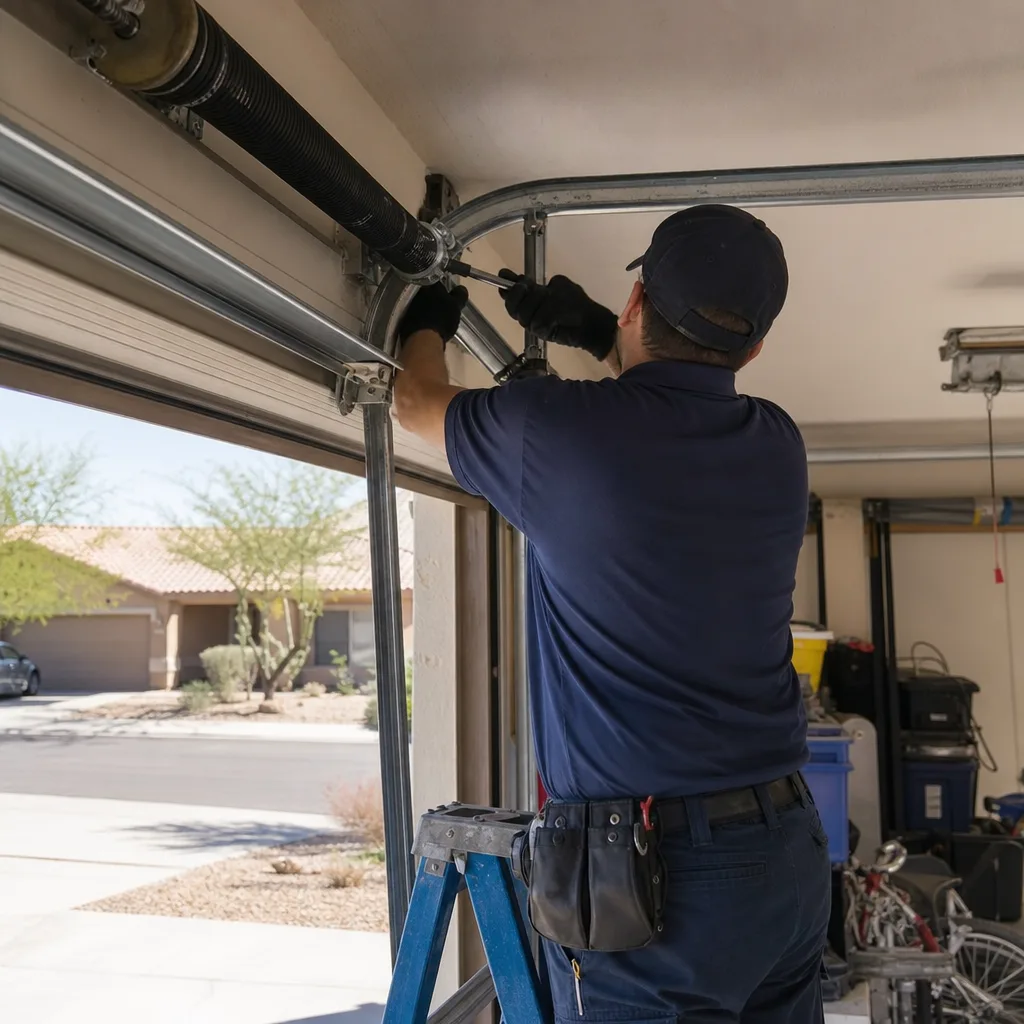
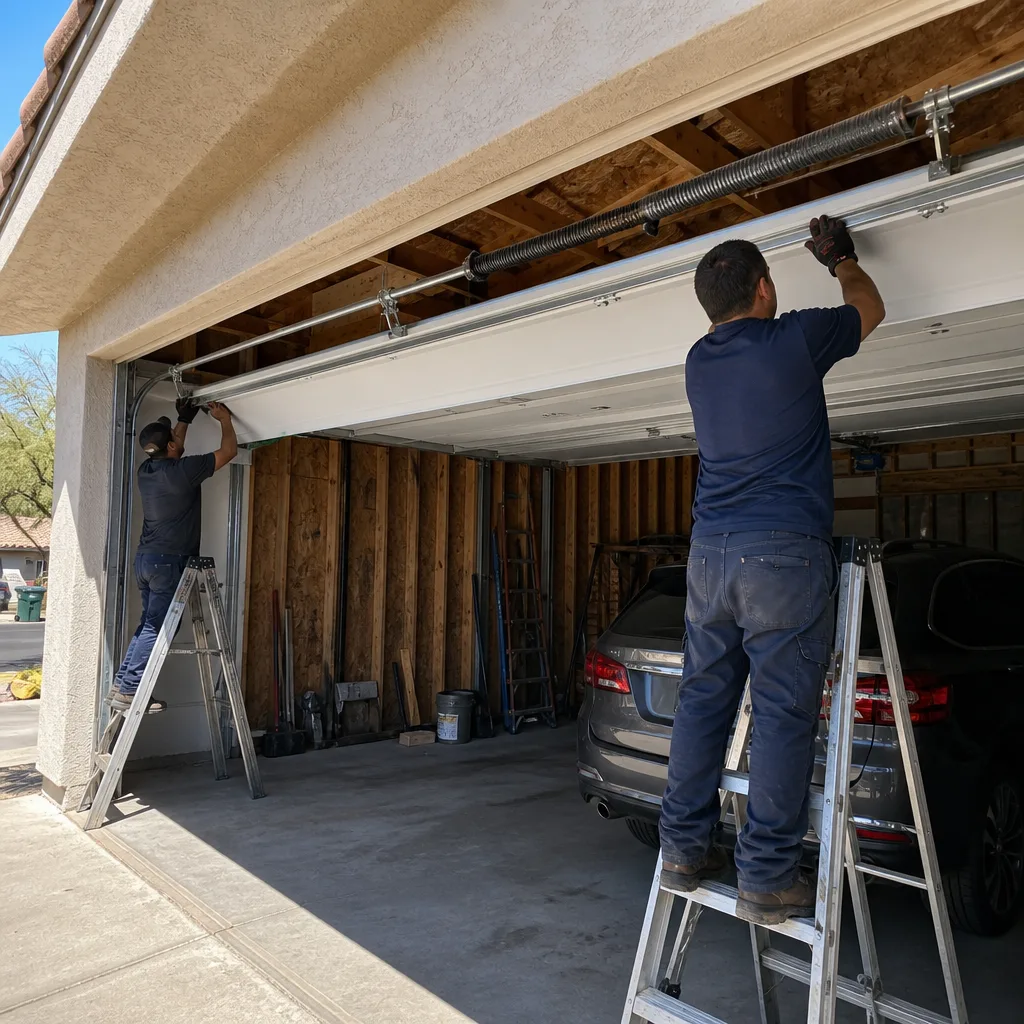
- Photograph the torsion spring assembly from the inside, standing on a step ladder and holding the phone level with the spring. Capture the full spring, the center bearing plate, and both drums. If the spring is broken, the break will usually be visible at the winding cone or as a visible gap between coils. A photograph of a rust bloom at the coil ends tells a technician whether this is a lubrication failure, a spring age failure, or both.
- Photograph each lift cable from bottom bracket to drum, close enough to show individual strands. If you see fuzzing or broken wires, the photo is the evidence that a quote will be based on, not an opinion.
- Photograph each roller from the side, showing the wheel and the track engagement. If a roller is wobbling or not spinning, video beats photo: record a five-second clip of the door moving so the technician can hear and see the roller behavior.
- Photograph the opener motor unit, specifically the model label. LiftMaster, Chamberlain, Genie, and Clopay all have different service approaches and part availability, and knowing the model before dispatch changes the parts list on the truck.
- Send the photos with your service request. A technician who quotes from photos plus your balance test report is quoting from evidence, which means the price they give you is more likely to hold when they see the door in person.
This documentation habit matters for one reason above all: it removes the asymmetry where only the technician knows what’s wrong. When you photograph your door during maintenance, you’re not just checking boxes. You’re building a paper trail that protects you from a surprise diagnosis and a surprise invoice. The written price before work starts is Clause 1 of The Haven Standard, and it’s the standard Servo operates under on every job, Servo Garage Doors Chandler home included.
Chandler-Specific Maintenance Frequency Table
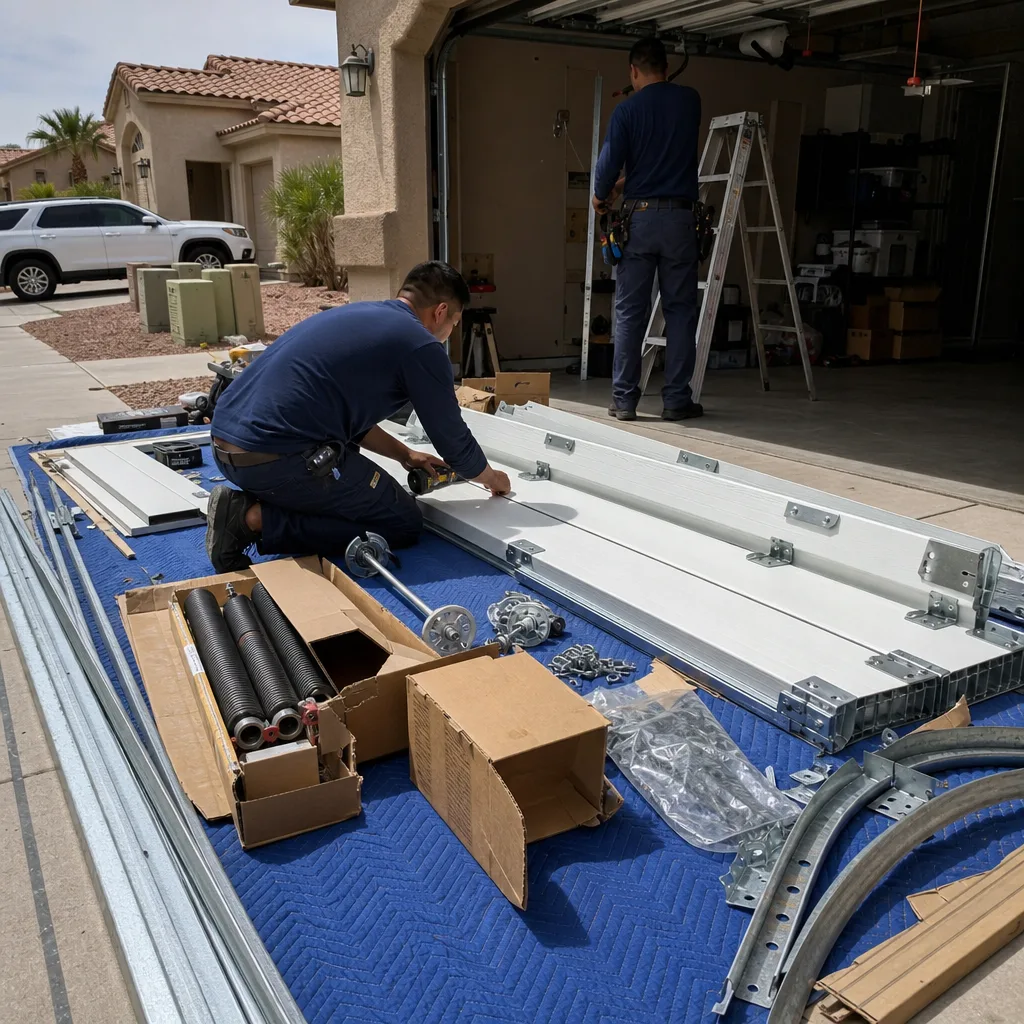
Most generic garage door maintenance guides say “twice a year,” which is frequency advice written for a climate with four mild seasons. Chandler has two dominant stressors: sustained UV exposure that degrades plastic and nylon components, and temperature swings that expand and contract metal on a daily cycle. Here’s the frequency breakdown that matches our local conditions:
- Daily (passive): Listen. A healthy garage door in Chandler should cycle with a smooth hum and a soft thud at the floor. New sounds (grinding, popping, squealing, banging) are the earliest warning. Note what changed and when. A popping sound at the spring is often the spring binding on a dry coil; a grinding sound at the roller is bearing failure in progress.
- Weekly (5 minutes): Visual inspection of cables, rollers, hinges, and hardware. Wipe photo eye lenses with a dry cloth. Walk the door path and confirm no objects are encroaching on the track.
- Monthly (10 minutes): Test the auto-reverse and photo eye safety features. Check that the opener’s emergency release cord is accessible and not frayed. Look at the weather seal along the bottom edge of the door: cracked or missing seals let dust, monsoon rain, and the summer heat into the garage.
- Quarterly (20 minutes): Run the balance test. Lubricate torsion springs, roller stems, and hinges with the correct product. Check the opener force setting by closing the door and confirming it stops without excessive force on a test object.
- Biannually (before January and before July): Full maintenance pass. Balance test, lubrication, safety tests, cable and roller inspection, opener travel limit check, and photo documentation of everything. The January pass matters most in Chandler: it catches the metal contraction failures that happen when overnight lows swing 30 degrees from daytime highs.
- Annually: Professional inspection by a licensed technician. The annual inspection should include spring cycle-life assessment, track alignment verification, opener logic board diagnostics, and a written report of findings. Servo offers this as a free service for Chandler homeowners as part of the Garage Door Installation in Chandler service area coverage, though the inspection itself is separate from any quote or repair.
The January timing is not generic advice. In our experience across Chandler, Ocotillo, and Sun Lakes, the highest cluster of torsion spring failures occurs between the second week of January and the second week of February. The preventive window is December: run your full maintenance pass before the overnight lows stabilize in the 30s, and you’ve addressed any marginal spring, stiff roller, or dry hinge before the conditions that expose them arrive.
Homeowner Tasks vs. Licensed Technician Work
This section exists because garage door maintenance sits on a line, and the Arizona side of that line is clear about which tasks are safe for a homeowner and which require a licensed professional. We’ll state it plainly: some of the most dangerous components in any home are under torsion load on your garage door, and underestimating that force is how people get seriously hurt.
Safe homeowner tasks:
- Visual inspection of cables, rollers, hinges, hardware, springs, and tracks
- Balance test via manual release
- Photo eye lens cleaning and alignment verification (minor realignment of the sensor bracket by hand is generally safe)
- Auto-reverse and mechanical reverse testing with an object
- Lubrication of torsion springs, roller stems, and hinges with appropriate products
- Track cleaning with a dry cloth
- Weather seal inspection and replacement of the bottom rubber seal (a beginner-level task with the door fully open and the opener disconnected)
- Documentation photography and videography
Tasks that require a licensed technician under Arizona safety standards:
- Any torsion spring adjustment, removal, replacement, or winding. Torsion springs store enough energy to sever fingers or cause fatal injuries if the winding bar slips. This is not a DIY task, period, regardless of what any online tutorial shows.
- Lift cable replacement or adjustment. Cables under tension can whip with enough force to cause serious lacerations and eye injuries.
- Bottom bracket repair or replacement. The bottom brackets anchor the cables and carry the full door load; removing them without properly de-tensioning the spring is extremely dangerous.
- Track removal or major realignment. The track system controls the door’s geometry, and an incorrectly aligned track can bind the door and cause it to jump its rollers.
- Opener force limit adjustment on difficult doors. If the force limit needs to be set high to close the door, the underlying problem is mechanical, not the setting.
- Any work involving the spring anchor bracket or the winding cone.
The distinction is not about skill or confidence. It’s about predictable load and failure mode. A homeowner can safely photograph a spring; a homeowner cannot safely apply torque to a spring under load. When in doubt, call a licensed shop. In Chandler, that means a company holding its own local license and insurance, with a documented paper trail. A maintenance tech who arrives without documentation and gives you a verbal estimate is not working to the standard Chandler homeowners should expect. For help vetting contractors, read our How to Hire a Garage Door Contractor in Chandler: A Step-by-Step Guide.
Common Mistakes to Avoid
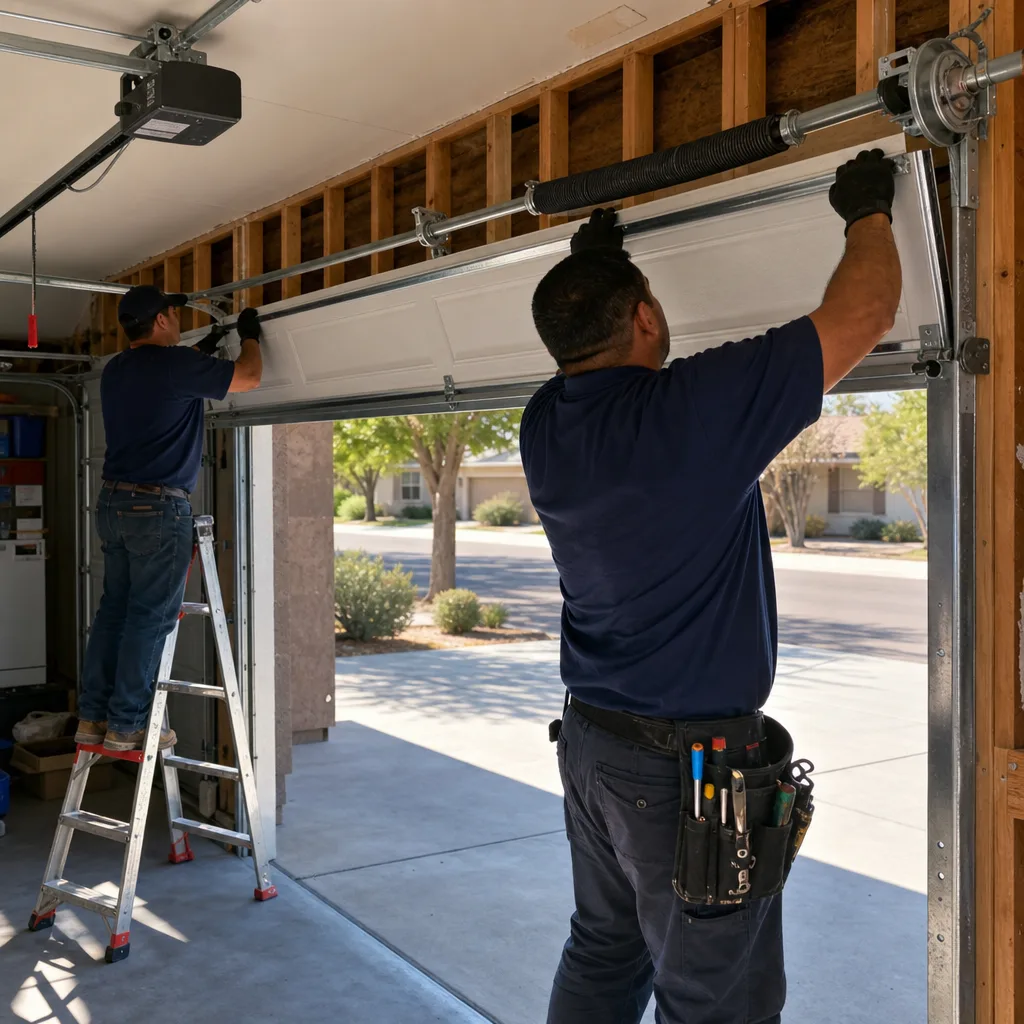
- Using penetrating oil on torsion springs. WD-40 and similar products are solvents that strip existing lubrication and leave the spring dry. In Chandler’s dust, a dry spring becomes a dust-caked spring within a month, and the friction accelerates the metal fatigue cycle.
- Lubricating the track. This is the most common mistake we correct on service calls across Chandler. Track grease collects desert dust into a grinding paste that destroys roller bearings and scores the track channel. The track should be dry and clean, nothing else.
- Skipping the balance test because the door “feels fine.” An opener can mask an out-of-balance door for months by working harder than it should. By the time you feel the problem, the opener motor and logic board have already been overloaded. The 2-inch test is the only way to know.
- Ignoring a squeaking spring. A torsion spring that squeaks is a spring with coil friction, and coil friction means the spring isn’t distributing load evenly across its length. That uneven distribution concentrates stress at the winding cone, which is exactly where clean breaks happen in Chandler’s January cold snap.
- Testing the auto-reverse with your hands. Never place any body part between a closing garage door and the floor. The photo eye can be misaligned without you knowing, and the door may not reverse. Use a roll of paper towels or a piece of lumber. Your body is not a test instrument.
- Assuming one annual maintenance pass is enough. In Chandler’s climate, the components that fail are the ones exposed to UV and temperature cycle stress. Rubber bottom seals crack in our heat, nylon rollers degrade in our UV, and springs fatigue in our winter temperature swings. The biannual schedule with a January emphasis is the bare minimum for our conditions, not a conservative recommendation.
- Hiring on price alone without asking about documentation. A low quote with no written scope means the price can change the minute the door is open. In Chandler, the market supports technicians who provide written pricing; if the person on the phone won’t commit a price to writing, the person at your door won’t either.
When to Call a Professional
Call a professional for Garage Door Repair services when the balance test fails in either direction, when you see broken cable strands or fuzzing, when the spring shows a visible gap or rust bloom, when the auto-reverse test fails, when the door jumps its track, or when any cable, spring, or bracket is involved in a repair. These are not maintenance tasks; they are repair conditions with a defined risk profile. A licensed Chandler technician will measure the spring, document the failure, quote a written price, and complete the work with the panel, spring, and hardware all returned to tolerance. Servo Garage Doors Chandler offers free estimates in Chandler and the surrounding area, with a documented photo record on every visit. Call (520) 482-1879 to schedule an inspection, and the price will be on paper before any work begins.
Frequently Asked Questions
Every three months, using a silicone-based spray for torsion springs and roller stems and a white lithium or PTFE-based grease for hinges. Chandler’s dry heat and dust load bake standard lubricants into a sticky film within six weeks, so the quarterly schedule replaces the generic “twice a year” advice written for milder climates. If you hear the spring pop or squeak between lubrication cycles, apply a light silicone coat at the first sound. Call (520) 482-1879 for a professional lubrication and inspection if the noise persists.
Yes, for inspection, balance testing, lubrication, photo eye cleaning, safety feature testing, and documentation. No, for any torsion spring adjustment, cable replacement, bottom bracket repair, or track realignment. The safe tasks require no tools beyond a tape measure and a phone camera; the unsafe tasks involve stored energy that can cause serious injury without specialized tools and training. If you’re unsure which category a task falls into, call (520) 482-1879 and ask before touching anything.
A properly balanced door, when released at half-open, stays within 2 inches of that position without dropping or rising. If it drops, the spring is under-tensioned or weakened; if it rises, the spring is over-tensioned. Both conditions shorten spring life and overload the opener. Run the test quarterly and call a licensed Chandler technician if the result falls outside the 2-inch window.
Standard torsion springs are rated for 10,000 cycles, which translates to roughly 7 to 10 years in a typical Chandler home with two cars and two open-close cycles per day. However, Chandler’s winter temperature swings and summer dust load reduce that lifespan if the springs run dry or under-tensioned. A spring that’s never been lubricated and never balance-tested may fail in 5 years; a spring maintained to the schedule in this guide can exceed its rated cycle life. When the spring breaks, a licensed technician should handle the replacement, never a homeowner.
The popping sound is the spring coils binding and releasing as they expand and contract through Chandler’s daily temperature swings. The metal cools overnight, contracts, and grips against itself at the coil interfaces; when the door cycles in the morning, the coils release with a pop. Lubrication reduces but doesn’t eliminate the effect. If the pop is sharp and the door jerks at the same moment, you may have a spring that’s binding badly enough to warrant a measured evaluation. Call (520) 482-1879 for a free inspection if the sound changes suddenly.
Repair when the door is structurally sound and the failure is isolated: a single broken spring, a failed roller, a worn hinge, a faulty opener part. Replace when the panels are cracked or rotting, the track system is bent beyond adjustment, the door is more than 20 years old and the cost of repeated repairs approaches 50% of replacement cost, or when you want insulation and sealing performance that the current door can’t provide. Our Garage Door Installation in Chandler team gives a written comparison of repair versus replacement cost on every consultation, so you can make the call from numbers, not pressure.
The Bottom Line
Garage door maintenance in Chandler is not a twice-a-year formality. It’s a quarterly rhythm built around our specific conditions: dry heat that bakes lubricants, dust that grinds hinges, and winter temperature swings that snap under-maintained springs. The checklist in this guide gives you pass/fail criteria for every component, the right products for our climate, and a clear line between safe homeowner work and licensed technician work. For more guides & resources on keeping your door running smoothly, explore our blog. Run the balance test quarterly, lubricate with silicone and lithium products, photograph everything, and schedule an annual professional inspection before January. When the documentation shows a problem, call (520) 482-1879 for a free estimate. The price will be in writing before any work starts, with a documented photo record when the technician leaves.
Written by Marcus Deller, Owner at Servo Garage Doors Chandler, serving Chandler since 2015.